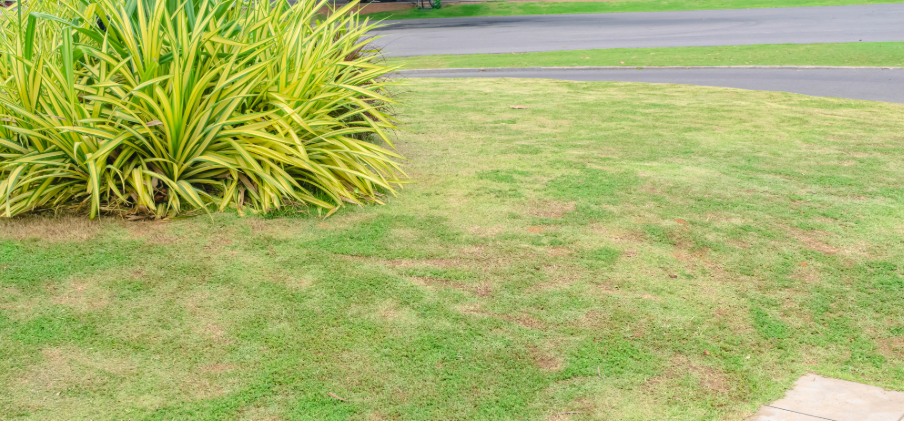
Quick answer: Brown patches on Huntsville lawns are most commonly caused by heat and drought stress, clay-heavy soils, fungal diseases like brown patch fungus, poor irrigation, soil compaction, or pest activity. Identifying the specific cause is essential before treating, since the wrong fix can make things worse. Buckeye Turf Solutions offers free lawn assessments to Huntsville homeowners at (256) 932-2120.
Brown patches are one of the most frustrating problems Huntsville homeowners face. One week your lawn looks great, the next there are dead-looking spots spreading across the yard. You try watering more. You apply fertilizer. Nothing works, and in some cases, it gets worse.
The problem is that brown patches can have several different root causes, and treating the wrong one wastes time and money. North Alabama's climate makes this especially tricky. Hot, humid summers, heavy clay soils throughout Madison County, and the watering demands of warm-season grasses like Bermuda and Zoysia create conditions where multiple problems can occur at once.
Buckeye Turf Solutions has been diagnosing and treating Huntsville lawns for over 20 years. This guide covers the most common causes of brown patches in the Huntsville area, the mistakes homeowners make when trying to fix them, and the professional treatments that actually work.
What Are the Most Common Causes of Brown Patches in Huntsville?
Heat and Drought Stress
Huntsville summers are no joke. Temperatures regularly climb above 90°F from June through August, and stretches of dry weather can put serious stress on warm-season grasses. Bermuda and Zoysia are relatively drought-tolerant, but without consistent irrigation, they go dormant and turn brown. The key difference between drought stress and disease is the pattern; drought damage tends to follow sun exposure and slope, while fungal issues spread in irregular or circular patches.
Brown Patch Fungus
Brown patch fungus (Rhizoctonia solani) thrives in exactly the conditions Huntsville sees every summer: nighttime temperatures above 70°F combined with high humidity. It spreads fast and leaves behind circular patches of brown, matted grass with a darker outer ring. This is one of the most misidentified problems in North Alabama lawns. Homeowners often assume the grass needs more water, add more, and accidentally create the wet conditions that make the disease spread further.
Clay Soil and Poor Drainage
Much of the Huntsville area, including neighborhoods in Madison, Hampton Cove, and Jones Valley, sits on heavy clay soil. Clay soil compacts easily, holds water poorly, and makes it difficult for grass roots to absorb nutrients. After a wet spring followed by dry summer heat, lawns in these areas are especially vulnerable. Water either pools on the surface or runs off before it can reach the root zone, leaving grass stressed and patchy.
Inconsistent Irrigation Coverage
A surprising number of brown patches trace back to the irrigation system itself. Broken sprinkler heads, misaligned nozzles, or zones that don't overlap properly leave dry spots that grass simply can't survive in summer heat. Conversely, over-watering in certain zones can trigger fungal disease. Irrigation inspections and adjustments are often the fastest fix for recurring patch problems.
Crabgrass, Weeds, and Fire Ants
Crabgrass and broadleaf weeds compete with turf for water and nutrients, leaving grass thin and patchy over time. Fire ants are another culprit unique to North Alabama lawns; their mounds disrupt soil structure and damage root systems in a scattered pattern across the yard. Both problems require targeted treatment rather than general fertilization.
Soil Compaction
Heavy foot traffic, clay soils, and wet conditions all contribute to compaction. Compacted soil reduces the space for air, water, and nutrients to reach grass roots. The result is thin, struggling turf that browns out under stress. Aeration is typically the most effective solution.
Why Huntsville's Climate Makes Brown Patches Harder to Manage
North Alabama's climate creates a narrow window for lawn health. Spring brings heavy rainfall that can saturate clay soils and promote fungal activity. Summer heat follows quickly, stressing grass that hasn't had time to develop deep roots. Then dry spells in July and August push drought stress further.
Warm-season grasses like Bermuda and Zoysia handle heat well but require specific fertilization timing, adequate irrigation, and active disease management to stay healthy through a Huntsville summer. Applying the wrong fertilizer at the wrong time, nitrogen in late summer for example, can actually trigger brown patch fungus by encouraging soft, vulnerable leaf growth.
DIY Fixes vs. Professional Lawn Care: What Actually Works?
Many Huntsville homeowners try to address brown patches themselves before calling a professional. Some DIY steps do help. Adjusting your mowing height, improving drainage around problem areas, and calibrating your irrigation system are all reasonable starting points.
The common mistakes, though, tend to make things worse:
- Over-watering in response to brown patches: If the cause is fungal, extra moisture accelerates the problem.
- Applying granular fertilizer to stressed grass: This can burn already-weakened turf and may encourage disease.
- Using the wrong fungicide: There are several types of brown patch fungus, and not all respond to the same treatments.
- Treating for one problem when another is present: Clay soil compaction and brown patch fungus require completely different approaches.
Call a professional when patches spread despite your efforts, when the problem returns every season, or when you simply can't identify the cause. A lawn that doesn't respond to basic treatment usually has an underlying issue, soil chemistry, drainage, or disease, that requires professional assessment.
How Buckeye Turf Solutions Treats Brown Patches in Huntsville
Buckeye Turf Solutions uses a structured process to identify the real cause of brown patches before recommending any treatment. Here's what that looks like:
Step 1: Professional lawn assessment. A technician visits your property, examines the patches, reviews your irrigation setup, and evaluates soil conditions. This is the step most DIY approaches skip entirely.
Step 2: Soil amendment and fertilization. If nutrient deficiency or soil chemistry is the issue, Buckeye Turf Solutions develops a customized fertilization plan based on your specific grass type and soil conditions, not a generic seasonal schedule.
Step 3: Aeration for compacted clay soils. Core aeration relieves compaction, improves drainage, and allows water and nutrients to reach the root zone. For Huntsville lawns on heavy clay, this is often a key part of restoring turf health.
Step 4: Disease and pest treatment. If brown patch fungus or grub damage is confirmed, targeted treatment is applied. Weed control and grub management are handled separately to ensure the right product is used for each problem.
Step 5: Irrigation repair and adjustment. Buckeye Turf Solutions inspects and adjusts irrigation systems to ensure even coverage throughout your yard, eliminating the dry and saturated zones that lead to recurring brown patches.
Step 6: Long-term maintenance. A seasonal maintenance plan keeps your lawn protected year-round, with scheduled treatments timed specifically to Huntsville's climate.
How to Prevent Brown Patches Year-Round in Huntsville
Prevention is much easier than treatment. For Huntsville homeowners, the following practices make the biggest difference:
- Fertilize on a Huntsville-specific schedule. Warm-season grasses like Bermuda and Zoysia need nitrogen in late spring and early summer, not late summer or fall.
- Aerate annually. For lawns on Madison County's clay soils, annual core aeration significantly reduces compaction and improves drainage.
- Water deeply and less frequently. Watering deeply two to three times per week encourages deep root growth, while daily shallow watering keeps roots near the surface and increases disease risk.
- Address drainage problems proactively. Low spots that collect water after Huntsville's spring rains are prime locations for fungal disease. Grading or drainage solutions fix the problem at the source.
- Maintain healthy trees. Trees that shade large portions of a lawn can thin out grass and increase moisture retention at ground level. Tree care and proper canopy management help balance sunlight and airflow across your yard.
Get Your Huntsville Lawn Back on Track with Buckeye Turf Solutions
Brown patches are solvable. The key is identifying the right cause and applying the right treatment, which requires knowing your grass type, your soil, and the specific conditions of your Huntsville-area yard.
Buckeye Turf Solutions has spent over 20 years doing exactly that for homeowners across Huntsville, Madison, Hampton Cove, Harvest, and surrounding communities. The team is family-owned, locally rooted, and equipped to handle everything from a single brown patch to a full lawn restoration.
Call Buckeye Turf Solutions at (256) 932-2120 or request a free estimate online. A professional assessment costs nothing, and knowing what's actually wrong with your lawn is the fastest path to fixing it.
Frequently Asked Questions About Brown Patches on Huntsville Lawns
What is the most common cause of brown patches in Huntsville, Alabama?
The most common causes are brown patch fungus, heat and drought stress, and clay soil compaction. Huntsville's humid summers and heavy clay soils throughout Madison County create conditions where multiple causes can occur simultaneously, making accurate diagnosis important before treating.
How do I tell the difference between drought stress and brown patch fungus?
Drought stress typically appears in areas with the most sun exposure or on slopes where water runs off. Brown patch fungus usually spreads in irregular or roughly circular patterns and may show a darker outer ring. If your grass browns in wet, humid conditions rather than dry ones, fungal disease is the more likely cause.
Will watering more fix brown patches in my lawn?
Not always. Over-watering is one of the most common mistakes Huntsville homeowners make. If the patches are caused by brown patch fungus, additional moisture accelerates the disease's spread. Watering deeply but less frequently is generally more effective than watering daily.
When should I call a professional lawn care service about brown patches?
Call a professional when patches continue to spread despite basic treatment, when the problem returns every summer, or when you cannot identify the cause. Recurring brown patches usually indicate an underlying issue, compacted clay soil, drainage problems, or a specific lawn disease, that requires a professional assessment.
Does Buckeye Turf Solutions offer free lawn assessments in Huntsville?
Yes. Buckeye Turf Solutions offers free lawn assessments to homeowners in Huntsville and surrounding North Alabama communities. Call (256) 932-2120 or visit the contact page to schedule a visit.
How does clay soil in North Alabama contribute to brown patches?
Clay soil compacts under foot traffic and wet conditions, reducing the space for air and water to reach grass roots. Poor drainage leads to waterlogged soil in spring and drought-stressed grass in summer, both of which weaken turf and create conditions where disease and pests take hold more easily.